Hydraulic Rock Hammer Rental - Indeco HP1000
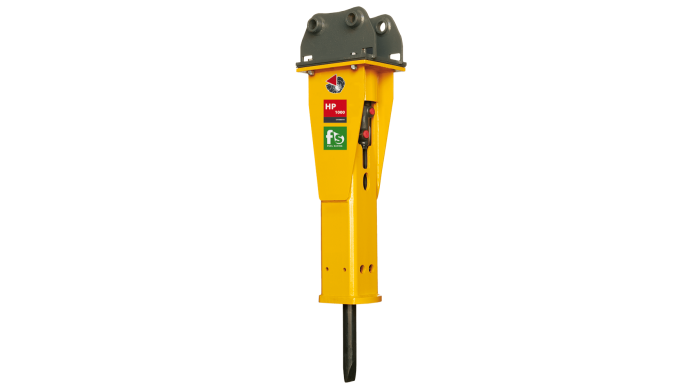
The Indeco HP1000 hydraulic rock hammer is the attachment you add to an excavator when the bucket hits something it can't move — granite ledge, reinforced concrete slabs, frost-hardened trench walls, and compacted subbase that digging force alone won't break. NorthPoint Equipment Rentals carries the HP1000 across all five New Hampshire locations and pairs it with compatible excavators already in the fleet, so contractors across the Lakes Region and North Country can add it to an existing rental the moment the job reveals material the bucket can't handle.
Description
What the HP1000 Brings to the Job
Impact Energy That Moves Rock The Indeco HP1000 delivers impact energy in the class matched to mid-size compact excavators — enough force per blow to fracture granite ledge, break reinforced concrete, and work through compacted material that digging force deflects off without making progress. The chisel strike rate and impact energy combination is what separates a breaker that works on real New Hampshire ledge from one that chips at the surface without making depth.
Indeco Hydraulic Engineering Indeco builds breakers specifically — it's not a side product in a broader equipment lineup. The HP1000's internal valve system and piston geometry are designed to maintain consistent strike energy across varying hydraulic input conditions, which means the breaker performs at rated output even as the carrier machine's hydraulic temperature climbs through a long breaking session. Consistent output across a full working day is the difference between a breaker that finishes the ledge section and one that slows progressively as conditions change.
Hardened Steel Chisel The HP1000 strikes through a hardened steel chisel sized for the attachment's impact class — the contact point between the hammer and the material. The chisel geometry focuses impact energy into the fracture point rather than distributing it across a larger surface. Focused energy at the chisel tip is what initiates fracture in hard granite and reinforced concrete rather than compressing the material surface without breaking it.
Low Blank-Fire Protection Indeco built blank-fire protection into the HP1000 to prevent the hammer from cycling without the chisel in contact with material — a common cause of internal damage on breakers run by operators who lift the tool off the surface before the breaking cycle stops. Blank-fire protection extends the working life of the attachment and prevents the internal component damage that drives up repair costs and shortens rental return life on lesser-built breakers.
Excavator Boom Positioning Mounted on an excavator boom and arm, the HP1000 puts the breaking force exactly where the operator points it — into a specific fracture line on a ledge face, along a concrete slab joint, or at the corner of a frost-hardened trench wall — with the precision and repositioning speed that a standalone breaker or handheld equipment can't match. The excavator's reach and rotation turns the HP1000 into a directed breaking tool rather than a machine that works in a fixed position until the operator moves it manually.
Compatible Across the Mid-Size Fleet The HP1000 is sized for the mid-size compact excavator class — machines in the range where the carrier weight and hydraulic output match the breaker's impact energy requirements. Running a breaker on a machine with adequate weight behind it is what makes the difference between productive breaking and an attachment that bounces off hard material because the carrier machine can't hold it against the surface under impact.
New Hampshire ledge doesn't announce itself. A trench that's moving through clean sandy loam hits granite two feet down without warning, a foundation cut that was on schedule stops when the bucket deflects off compacted glacial till that won't yield to digging force, a concrete demo job turns into a half-day event because a sledgehammer isn't the right tool and nobody brought a breaker. The Indeco HP1000 hydraulic rock hammer exists specifically for those moments — and on New Hampshire job sites, those moments come up with enough regularity that contractors who haven't had a breaker available wish they did. At NorthPoint, we keep the HP1000 in the lineup because our counter staff fields calls about ledge and hard material constantly, and the answer is almost always the same: add a breaker to your excavator rental before you leave the yard, not after you've spent half a day trying to dig around the problem.
The HP1000 is a hydraulic impact hammer — the excavator's auxiliary hydraulic circuit drives a piston inside the breaker body, which strikes a hardened steel chisel against the target material at a rate and energy level matched to the mid-size compact excavator class. Indeco builds breakers as their core product rather than as an add-on to a broader equipment lineup, and the engineering reflects that focus. The internal valve system maintains consistent strike energy across varying hydraulic input conditions — as the carrier machine's hydraulic oil temperature rises through a sustained breaking session, the HP1000's output doesn't drop the way it does on breakers with less sophisticated internal valve geometry. That consistency matters on a job where the ledge section runs for hours rather than minutes. The blank-fire protection system prevents the hammer from cycling when the chisel loses contact with the material, which protects the internal components from the kind of damage that accumulates quickly on breakers without it — particularly when operators are working in confined spaces or on irregular surfaces where maintaining contact isn't always straightforward.
The excavator mounting is a fundamental advantage over alternative breaking methods that often gets underweighted in the planning stage. A standalone compressor-driven breaker or a hydraulic handheld tool works from a fixed position until the operator moves it manually — productive on small, accessible breaking areas, but slow on anything that requires repositioning across a ledge face, working at depth in a trench, or breaking material on a slope where physical handling is difficult. The HP1000 on an excavator boom repositions in seconds, puts breaking force at depth in a trench without an operator climbing in, and works on slope faces and irregular surfaces that handheld equipment can't access safely. The excavator operator controls the chisel placement precisely — driving fractures along the natural grain of the ledge, working a concrete slab from the perimeter toward the center, or breaking frost-hardened trench walls in sequence without stopping to reposition manually between strikes.
The contractors and municipalities renting the HP1000 at our New Hampshire locations are dealing with the material conditions that define excavation work in this part of the country. Granite ledge is close to grade across most of central and northern New Hampshire — it shows up on residential foundation cuts, utility trenches, septic system excavation, and commercial site prep without much predictability. Reinforced concrete demo comes up on road work, retaining wall removal, and building demolition where the slab or structure needs to be broken before it can be removed. Frost-hardened ground in early spring — before the thaw has reached working depth — turns a routine trench into a breaking job in April the same way ledge does in July. And compacted subbase on road and parking area work resists bucket penetration in a way that looks like ledge until the HP1000 confirms it isn't. Our team sees all of these conditions regularly across our service areas and the HP1000 is one of the most consistently requested attachments we carry.
The HP1000 pairs with excavators in the mid-size compact range — machines with the carrier weight and hydraulic output to hold the breaker against the material under impact and deliver the auxiliary flow the hammer requires to operate at rated energy. For general excavator and backhoe rental across New Hampshire, the HP1000 adds a breaking capability to machines that would otherwise have to work around hard material or abandon the approach entirely. On jobs that move from breaking into excavation — clearing ledge from a foundation area, breaking a concrete slab before removing the pieces — the attachment swap from breaker to bucket happens at the machine without a second mobilization. After the breaking phase, compaction of disturbed material pairs naturally with equipment from our compaction and asphalt lineup and we can set that up as part of the same rental.
Before you book, two things to confirm with our counter staff: first, that the excavator you're pairing with the HP1000 has auxiliary hydraulics available and delivers the flow rate the breaker requires — running a breaker on undersized hydraulic flow produces reduced output and can damage the attachment over time. Second, that the carrier machine has enough operating weight to hold the chisel in contact with the material under impact — a breaker on a machine that's too light for the attachment class bounces rather than breaks, which is unproductive and hard on both the attachment and the carrier. Our staff will match the HP1000 to the right machine for your job before you commit to the rental. Our best price guarantee applies on the HP1000 as it does across the full fleet, and contractors doing regular excavation work in New Hampshire who run into ledge consistently should look at a charge account — keeping breaker and machine rentals billed by project rather than by individual transaction makes the accounting side of recurring ledge work straightforward.
Specifications
| Specification | Value |
|---|---|
| Attachment Details | |
| Attachment Type | Hydraulic rock hammer / breaker |
| Manufacturer | Indeco |
| Model | HP1000 |
| Chisel Material | Hardened steel |
| Compatibility | |
| Hydraulic Requirement | Auxiliary hydraulics required — confirm flow rate |
| Connection Type | Standard excavator coupler |
| Machine Class | Mid-size compact excavators |
| Operation | |
| Drive System | Hydraulic — piston impact mechanism |
| Blank-Fire Protection | Yes — built in |
| Target Material | Granite ledge, reinforced concrete, compacted subbase, frozen ground |
Auxiliary hydraulic flow rate and carrier machine operating weight must be confirmed before booking — running the HP1000 on a machine with insufficient hydraulic output or inadequate carrier weight reduces breaking performance and can cause attachment damage. Contact our counter staff to verify compatibility.
What It Gets Used For
- Granite ledge fracturing on residential foundation cuts, utility trenches, and septic excavation
- Reinforced concrete slab and structure demolition before material removal
- Frost-hardened ground breaking on early-season trenching and excavation jobs
- Compacted subbase breaking on road repair, parking area work, and utility corridor installation
- Ledge clearing from building envelopes and pad areas before excavation resumes
- Retaining wall and concrete structure removal where hand breaking isn't practical
Questions Renters Actually Ask
What excavator do I need to run the HP1000 effectively — can I use it on a mini? The HP1000 is sized for the mid-size compact excavator class — machines with enough operating weight and auxiliary hydraulic output to hold the chisel against hard material under impact and deliver the flow the breaker requires. Running it on a mini excavator in the 2- to 4-ton range will produce reduced breaking energy because the carrier machine can't hold the attachment in contact with the material under impact recoil — the machine bounces rather than breaks. As a practical minimum, pair the HP1000 with an excavator in the 6-ton-and-up range; our counter staff will confirm the right match for your specific job and location before you book.
How long does it typically take to break through granite ledge on a New Hampshire site? Breaking time on granite ledge depends on the fracture pattern and thickness of the ledge rather than the attachment — granite that has natural fracture lines breaks faster than continuous solid rock, and shallow ledge clears more quickly than a deep continuous shelf. On typical residential and utility job sites across central New Hampshire, a ledge section that stops an excavator bucket for a full day can often be broken and cleared in two to four hours with the HP1000 on an appropriately sized carrier machine. That's not a guarantee — continuous solid granite without natural fracture lines is a different job than fractured ledge close to grade — but it's a realistic range for the conditions our team sees most often on Lakes Region and I-93 corridor job sites.
Can the HP1000 break reinforced concrete, or is it only for rock? Yes — the HP1000 breaks reinforced concrete effectively, and concrete demolition is one of its most common applications alongside ledge work. Reinforced slabs, footings, retaining walls, and road surfaces are all practical breaking targets for this attachment. The approach on reinforced concrete is slightly different from ledge work — starting at edges and joints rather than center-slab, working in a pattern that lets the rebar pull free as the concrete breaks rather than locking the chisel — and our counter staff can walk you through the technique before you leave the yard if it's your first time running a breaker on concrete. The HP1000's impact energy class handles standard residential and light commercial concrete without issue; heavily reinforced industrial slabs may require a larger breaker class depending on thickness and reinforcement density.
Other products
Browse some of our other products
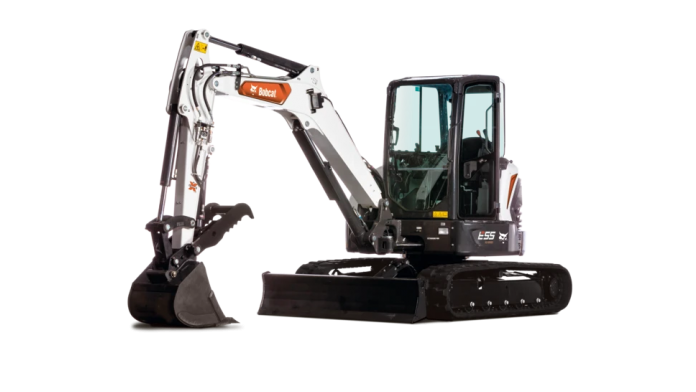
Excavator Rentals
Excavator Rental - Bobcat E55 Compact 12,000#, 6 Tons
from $ 425.00 per day
- 12,000 lbs | 6.0 Tons | 49.7 HP | 19.0 Gallons
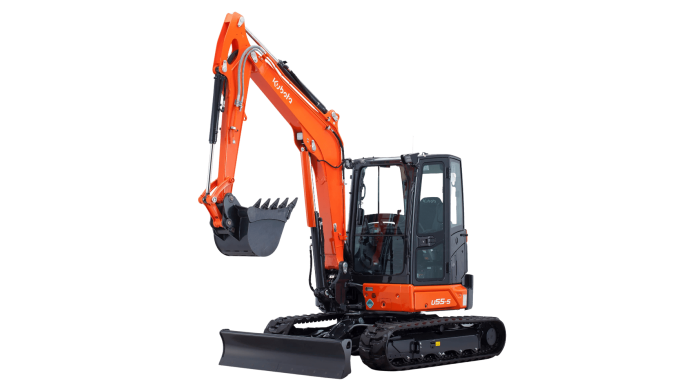
Excavator Rentals
Excavator rental - Kubota U55 13,200#, 6.6 Tons
from $ 425.00 per day
- 13215 lbs | 6.6 Tons | 47.6 HP | 17.1 Gallons
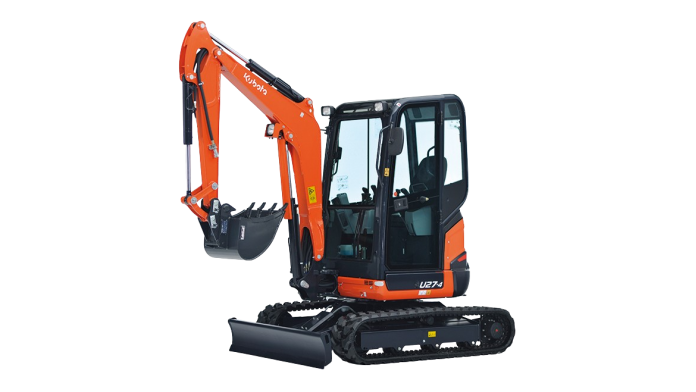
Excavator Rentals
Excavator Rental - Kubota U35-4 Compact Excavator 8,996#, 4.5 Tons
from $ 375.00 per day
- 8,996 lbs | 4.5 Tons | 23.3 HP | 12.4 Gallons