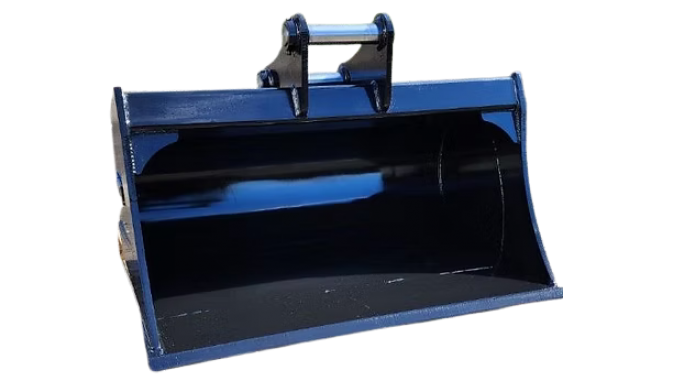
Excavator Tilt Bucket 48" - Rental
A 48-inch tilt bucket turns a standard excavator into a precision grading tool — the hydraulic tilt function lets the operator match the bucket angle to the slope or grade without repositioning the machine, which cuts hours off finish work that a fixed bucket handles awkwardly at best. NorthPoint Equipment Rentals carries tilt bucket attachments across all five New Hampshire locations, and it pairs directly with excavators already in our fleet at the Tilton hub and beyond, so you can add it to an existing rental without sourcing an attachment from a separate yard.
Description
What the 48" Tilt Bucket Brings to the Job
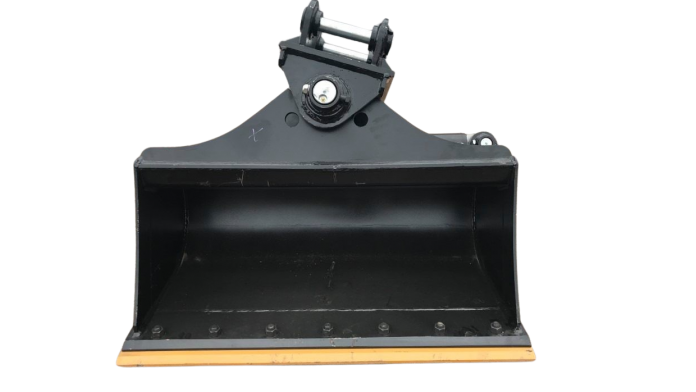
Independent Bucket Tilt The tilt function operates hydraulically through the excavator's auxiliary circuit, rotating the bucket left or right independent of the boom and arm position. Grading a slope or cutting a drainage swale at a consistent angle becomes a single continuous pass rather than a series of repositioned cuts — the operator controls the grade from the cab without moving the machine.
48" Cutting Width At 48 inches of cutting width, this bucket covers meaningful ground per pass on grading and finish work without being oversized for the compact and mid-size excavators it's designed to run on. The width is matched to the machine class — wide enough to work efficiently, narrow enough to maintain the control that finish grading requires.
Finish Grade Accuracy The tilt axis lets operators hit precise grade on slopes, swales, and site contours that a fixed bucket can only approximate through repeated passes and repositioning. On a drainage install or a sloped foundation perimeter, the difference between a tilt bucket and a standard bucket is measurable in both time and final grade accuracy.
Faster Slope Work Cutting and finishing slopes — retaining wall bases, embankments, drainage channels, ditch lines — goes significantly faster when the bucket angle tracks the grade rather than the machine tracking the bucket angle. What takes three passes with a fixed bucket on a 3:1 slope often finishes in one with a tilt bucket dialed to the correct angle.
Reduced Machine Movement Less repositioning means less ground disturbance, less time spent walking the machine, and less wear on the site surface during finish work. On a landscaped or partially finished site, keeping the excavator stationary while the bucket does the angle adjustment protects the surrounding area in a way that constant machine repositioning can't.
Compatible with Auxiliary Hydraulics The tilt bucket runs off the excavator's existing auxiliary hydraulic circuit — no additional hydraulic lines, no modification to the machine, no special setup required beyond standard coupler connection. Any excavator in our fleet with auxiliary hydraulics is a candidate for this attachment — ask our counter staff to confirm compatibility with the specific machine you're renting.
A standard fixed bucket is the right tool for most excavation work — digging, trenching, material removal, rough grading. The point where it becomes a limitation is finish work on anything that isn't level. Slopes, swales, drainage channels, foundation perimeters, embankment faces — any grade work where the required cut angle doesn't match what the boom and arm geometry naturally produces sends the operator into a cycle of dig, reposition, dig again, reposition again. It gets the job done eventually, but it takes longer than it should and the finish quality reflects the limitation. A 48-inch tilt bucket solves that specific problem cleanly: the bucket rotates hydraulically on its own axis, independent of the boom and arm, so the operator sets the angle from the cab and holds it through the pass without moving the machine.
The hydraulic tilt function runs off the excavator's standard auxiliary circuit — no machine modification, no added plumbing, no setup beyond connecting the coupler. That means any excavator in our fleet with auxiliary hydraulics is a candidate for this attachment, and the pairing doesn't require any specialized knowledge to operate. The tilt control integrates with the existing joystick layout; operators familiar with auxiliary attachment operation on Kubota, Bobcat, Takeuchi, or Cat excavators will be comfortable with it quickly. The 48-inch cutting width is sized for the compact and mid-size class — wide enough to cover meaningful ground per pass on finish grading, narrow enough to maintain the precision that slope work and drainage installation require.
The jobs where the tilt bucket earns its rental cost most clearly are the ones where finish grade accuracy actually matters. Drainage swale installation is the obvious example — a consistent cross-section grade across a long run is difficult to maintain with a fixed bucket and straightforward with a tilt bucket that holds the angle through the pass. Slope finishing on retaining wall sites, embankments, and cut banks is another: the machine holds position while the bucket matches the slope face, rather than the machine walking along the face with a fixed bucket that can only approximate the angle. Foundation perimeter grading, where the excavator needs to work close to a structure at a specific batter angle, is a third — the tilt function lets the operator work precisely without the machine crowding the foundation wall.
Our team at NorthPoint Equipment Rentals sees the tilt bucket come up most often as an add-on to an existing excavator rental — a contractor books an excavator for a foundation or utility job, and adds the tilt bucket for the grading and finish phase rather than renting a separate grading machine or spending extra hours with a fixed bucket. That combination works well on New Hampshire residential and commercial sites where the excavation and finish grading happen on the same job in the same day. The terrain across the Lakes Region and North Country — sloped lots, roadside drainage work, hillside retaining wall installations — comes up constantly as the kind of work where a tilt bucket makes a measurable difference in how long the finish phase takes.
For contractors doing regular grading, drainage, and slope work, the tilt bucket pairs naturally with excavators across our excavator and backhoe rental fleet — from the compact machines in the 4- to 6-ton range up through the mid-size class. It also comes up alongside landscaping and grading equipment on larger site work where the excavator handles the rough cut and the tilt bucket finishes the grade. Before you add it to your rental, confirm with our counter staff that the excavator you're booking has auxiliary hydraulics plumbed to the arm — the vast majority of machines in our fleet do, but it's worth a quick check before you show up expecting to connect. Our best price guarantee applies on attachments as well as machines, and contractors doing regular grading work in New Hampshire should look at a charge account to keep attachment and machine rentals billed cleanly by project. Have a slope or drainage job coming up and not sure whether the tilt bucket is the right attachment or whether a different tool fits better? Call us — our counter staff knows the attachment lineup and will tell you straight what makes sense for the work you're describing.
Specifications
| Specification | Value |
|---|---|
| Dimensions | |
| Cutting Width | 48 in (4 ft) |
| Attachment Type | Hydraulic tilt bucket |
| Compatibility | |
| Hydraulic Requirement | Auxiliary hydraulics required |
| Connection Type | Standard excavator coupler |
| Machine Class | Compact to mid-size excavators |
| Operation | |
| Tilt Function | Hydraulic — operated from cab |
| Tilt Axis | Independent of boom and arm |
Confirm auxiliary hydraulic availability on your specific excavator rental before booking — our counter staff can verify compatibility at any of our five New Hampshire locations.
What It Gets Used For
- Drainage swale installation requiring consistent cross-section grade across a long run
- Slope finishing on retaining wall bases, embankments, and cut banks
- Foundation perimeter grading at precise batter angles close to structure walls
- Roadside ditch cleaning and reshaping on municipal and road contractor jobs
- Finish grading on sloped residential lots where a fixed bucket leaves visible irregularities
- Culvert inlet and outlet grading where the approach angle changes across the run
Questions Renters Actually Ask
Does the tilt bucket work with any excavator, or do I need a specific machine? The 48-inch tilt bucket requires auxiliary hydraulics plumbed to the excavator's arm — which the majority of machines in our fleet have as standard equipment, but not all. Before you book, confirm with our counter staff that the specific excavator you're renting has auxiliary hydraulics available at the arm end; they can verify compatibility in about thirty seconds on the phone. The coupler connection is standard across the compact and mid-size machines we carry, so if the hydraulics are there, the attachment connects without modification.
Is the tilt bucket worth adding to my rental, or can I just do the finish work with a fixed bucket? If your job involves any meaningful amount of slope work, drainage grading, or finish cuts at an angle, yes — the tilt bucket is worth it. A fixed bucket on a slope forces constant machine repositioning to maintain grade, which adds time and reduces accuracy on every pass. The tilt bucket holds the angle hydraulically from the cab, which turns multi-pass repositioned cuts into single continuous passes. On a job with a full day of grading, the time difference is significant — on a half-day finish phase, it still shows up clearly enough to justify the attachment cost. If your job is straight trench digging and flat grading, skip it and use a standard bucket.
Can an operator who hasn't used a tilt bucket before pick it up quickly? Yes — the tilt function is controlled through the excavator's auxiliary joystick or thumb switch, the same input used for any other hydraulic attachment. Operators comfortable with auxiliary attachment operation on standard excavators adapt to the tilt control within the first few passes. The adjustment period is short enough that most operators are using it productively within the first 30 minutes on site. If it's your first time with the attachment, our counter staff can walk you through the control inputs before you leave the yard — it's a two-minute explanation that saves the learning curve on the job site.
Other products
Browse some of our other products
Excavator Rentals
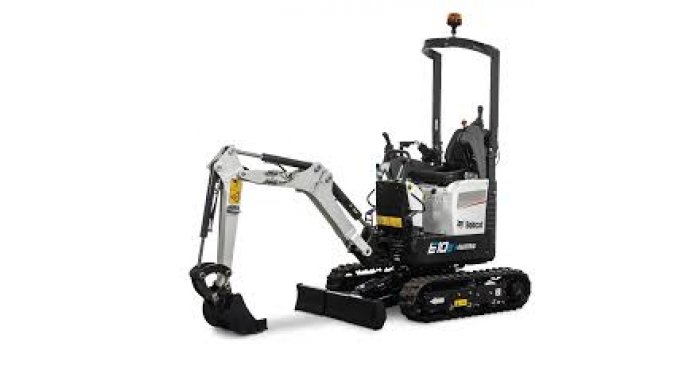
Excavator Rental - Bobcat E10 Mini Excavator 2593# 1,29 Tons
from $ 199.00 per day
- 2,593 lbs | 1.30 Tons | 10.2 HP | 4.20 Gallons
Excavator Rentals
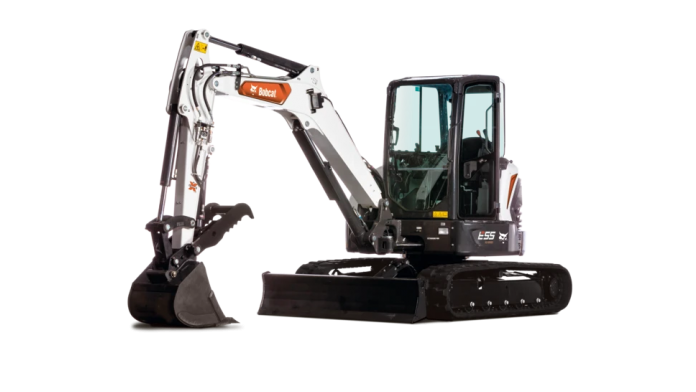
Excavator Rental - Bobcat E55 Compact 12,000#, 6 Tons
from $ 425.00 per day
- 12,000 lbs | 6.0 Tons | 49.7 HP | 19.0 Gallons