Excavator Rental - Takeuchi TB290 19,000lb Class
The Takeuchi TB290 is a 19,000 lb compact excavator that operates at the upper boundary of its class — dig depth, breakout force, and hydraulic output that puts it closer to a mid-size machine in practical capability while keeping the transport footprint of something you can move without a permit and park on a site that can't take a 25-ton machine. NorthPoint Equipment Rentals stocks the TB290 across all five New Hampshire locations, and it's a frequent call from contractors across the Lakes Region and North Country who need production-level output on jobs that don't have room for a full production machine.
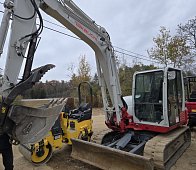
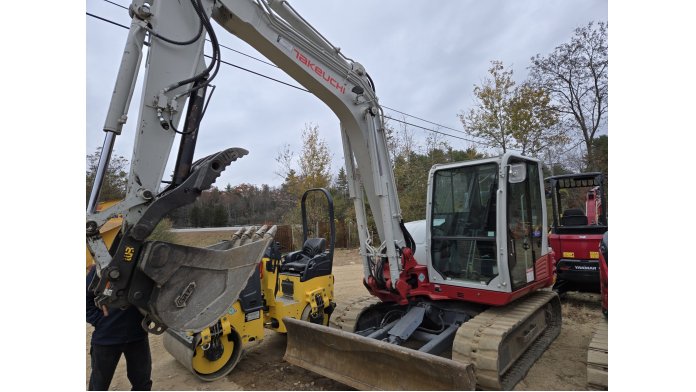
Description
What the TB290 Brings to the Job
Top-of-Class Dig Depth The TB290 reaches approximately 13 to 14 ft of maximum dig depth — enough to handle commercial foundation requirements, deep municipal utility corridors, and drainage installs that exceed what anything below 8 tons can reach in a single pass. On a New Hampshire job site where frost line requirements push utility depths well past 5 ft, that margin between adequate and finished is the whole difference between one day and two.
19,000 lbs of Committed Digging There's a weight threshold in excavator work where the machine stops negotiating with tough material and starts moving it — the TB290 is past that threshold. Compacted glacial till, heavy clay subbase, and the kind of root systems that have a lighter compact machine deflecting and repositioning are routine digging conditions at 19,000 lbs.
Takeuchi Build Quality Takeuchi has a specific reputation in the compact class for tight hydraulic tolerances, durable undercarriage components, and machines that hold their performance across hard use without drifting. The TB290's hydraulic system is tuned for consistent output under sustained load — not just peak numbers on a spec sheet — which matters on full-day commercial jobs where the machine runs from first light to quitting time.
Full Enclosed Cab The TB290's enclosed cab is climate controlled with heat and air conditioning, and the operator layout is designed for sustained production work — not just occasional residential digging. Visibility to the bucket and sightlines across the work area are clean enough to run the machine precisely through finish grading and cleanup without switching to a smaller tool.
High-Output Auxiliary Hydraulics The TB290's auxiliary hydraulic system delivers high-flow output matched to the machine's weight class — enough to run a hydraulic breaker at the pressure and volume a 19,000 lb machine's work actually demands. Takeuchi's hydraulic engineering at this size means attachments perform at rated capacity rather than the reduced output that undermines breaker and auger work on lighter machines.
Permit-Free Transport at This Weight At approximately 19,000 lbs, the TB290 moves on a properly rated lowboy on standard New Hampshire road routes without triggering oversize load permit requirements — a real logistics advantage at this capability level. The step to a full mid-size machine above this weight class brings permit coordination, specialized transport, and haul route planning that adds cost and complexity before the machine even reaches the job site.
The Takeuchi TB290 is what you reach for when the job has enough material, enough depth, and enough density that you need a machine built to sustain output across a full commercial workday — not one that handles the easy parts and slows on the hard ones. At approximately 19,000 lbs, it sits at the top of the compact excavator class in both weight and practical capability, and it's built by a manufacturer that has spent decades focused specifically on compact construction equipment rather than treating it as a secondary product line. That focus shows up in the way the TB290 performs: consistent hydraulic output under sustained load, an undercarriage built for hard use on real job sites, and a control feel that experienced excavator operators recognize as a machine that's been engineered rather than assembled to a price point.
Takeuchi built the TB290 around a diesel engine and hydraulic system matched to its operating weight — not undersized for the frame, not tuned for peak spec-sheet numbers that drop off under real working conditions. The auxiliary hydraulic output is high enough to run a breaker at rated pressure on hard material, run an auger through compacted subbase, or operate a hydraulic thumb on demolition and clearing work without the flow dropping as the machine heats up through the day. The dig depth of approximately 13 to 14 ft covers the full range of commercial foundation work, deep utility installation, and the municipal drainage projects that require consistent depth across a long run rather than just reaching the number on the spec sheet. The enclosed cab is fully climate controlled — heat and air conditioning — with sightlines and an operator layout built for long shifts on production jobs. In New Hampshire, where a commercial excavation job in September can start at 45 degrees and finish at 70, a cab that handles both ends of that range without the operator adjusting isn't a comfort feature, it's a productivity feature.
The zero tail swing design keeps the counterweight within the track width during rotation — at 19,000 lbs with real breakout force behind it, that means the machine can dig aggressively right up against a structure, curb line, or adjacent utility without pulling back to reposition. On municipal right-of-way work and commercial lots where the working envelope is constrained by infrastructure on multiple sides, that operational characteristic changes how the job runs from the first bucket to the last. The rubber track system keeps ground pressure manageable on finished surfaces, though at this weight class saturated spring ground will still show the machine's footprint — if your site has soft ground concerns, that's a conversation to have with our counter staff before booking rather than after you're on site.
Contractors and municipalities renting the TB290 at our New Hampshire locations are running jobs that are clearly in the commercial and municipal category: foundation excavation on mid-size commercial buildings, deep municipal utility installation where the trench depth and material density exceed what the light compact class handles efficiently, large culvert replacement on state and local road contracts, and land clearing on commercial sites where the scale of stump and root work requires a machine with production-level pulling force. Road contractors working the I-93 corridor and North Country highway system use it for drainage work where equipment size is limited by site access but output requirements match a commercial job. Our team fields calls on the TB290 regularly from contractors who've run up against the ceiling of what a machine in the 11,000 to 13,000 lb range can do on a specific job — it's the natural step up when the lighter compact is the right fit everywhere except the material or the depth.
New Hampshire's geology does a specific thing to excavation jobs that operators from other regions find surprising — the transition from manageable soil to hard glacial till or ledge happens fast, sometimes within a single trench run, and a machine that was keeping pace slows significantly when the material changes. The TB290 handles that transition without the same drop-off that lighter machines show. For confirmed ledge, the high-output auxiliary hydraulics support a hydraulic breaker at working pressure, and we carry compatible attachments at several locations. Call ahead and we'll stage it. For general excavator and backhoe rental across New Hampshire, the TB290 is the answer when the job has outgrown the U55 or KX057-5 range and stepping up to a full production machine like the Cat 336EL would be more machine than the site requires or the budget warrants.
Transport at this weight is straightforward compared to what comes above it — a properly rated lowboy, no oversize permits on standard New Hampshire road routes, no NHDOT coordination required. Diesel only; plan fuel for multi-day remote jobs since the TB290 burns at a rate consistent with its weight class. If the job moves from excavation into backfill and compaction, we can set up a plate compactor or jumping jack from our compaction and asphalt lineup as part of the same rental — that combination comes up constantly on utility and foundation jobs. Our best price guarantee applies at all five locations, and contractors running the TB290 on commercial work should set up a charge account — multi-day commercial rentals with attachments and delivery add up fast, and a charge account keeps the billing clean. Not sure whether the TB290 is the right call or whether your job sits in the U55 range below it or needs a full production machine above it? Describe the job to our counter staff and they'll give you a straight answer — no upsell, just the right machine for the work.
Specifications
| Specification | Value |
|---|---|
| Weight & Dimensions | |
| Operating Weight | ~19,000 lbs |
| Tons | ~9.5 tons |
| Tail Swing | Zero tail swing |
| Track Type | Rubber tracks |
| Performance | |
| Maximum Dig Depth | ~13–14 ft |
| Cab Type | Enclosed — heat & A/C |
| Auxiliary Hydraulics | Yes — high-flow at arm end |
| Power & Fuel | |
| Fuel Type | Diesel |
| Engine | Takeuchi diesel |
The TB290 hauls on a lowboy rated at or above its operating weight — no oversize load permits are required on standard New Hampshire road routes at this weight class. Verify your trailer's rated capacity and haul route before transport.
What It Gets Used For
- Commercial foundation excavation on mid-size buildings where light compact machines run out of depth or force
- Deep municipal utility installation — sewer, water, and drainage runs requiring 10 ft or more in tough material
- Large culvert replacement and highway drainage work on state and local road contracts
- Land clearing at commercial scale — stump and root extraction where production rate matters
- Ledge and hard material breaking with hydraulic breaker on confirmed rock sites
- Right-of-way excavation where equipment size is constrained but output requirements are commercial
Questions Renters Actually Ask
How does the TB290 compare to the Kubota KX080 — is there a meaningful difference at this weight class? The Takeuchi TB290 and Kubota KX080 are close in operating weight — TB290 at approximately 19,000 lbs versus the KX080 at 19,470 lbs — and both sit at the top of the compact class with comparable dig depths in the 13 to 14 ft range. The differences come down to brand engineering philosophy and operator familiarity rather than a clear capability gap: Takeuchi has a specific reputation for hydraulic consistency and undercarriage durability under hard use, while Kubota's control layout is familiar to operators who've run the Kubota compact line. Both are capable machines at this weight; what drives the call most often is which one your operator knows and which one is available at your location on your date. Call us and we'll tell you what's ready to go.
At 19,000 lbs, do I need a special trailer or permits to haul the TB290 in New Hampshire? No oversize load permits are required to haul the TB290 on standard New Hampshire road routes at this operating weight — it moves on a properly rated lowboy without NHDOT coordination or specialized transport. You'll need a heavy-duty equipment trailer rated at or above 19,000 lbs with appropriate ramps and tie-down points; most contractors running commercial equipment have the right setup already. CDL requirements depend on your combined rig weight — if your tow vehicle and loaded trailer combination exceeds 26,000 lbs GCWR, a CDL is required. If you're unsure where your rig lands, call us before pickup.
Is the TB290 worth it over a smaller compact if I'm only hitting ledge on part of the job? Yes, in most cases — and here's the straightforward reason: on a job with mixed conditions, a machine that handles the hard parts at full output is more useful than a lighter machine that handles the easy parts efficiently and slows significantly on the ledge. At 19,000 lbs with high-flow auxiliary hydraulics, the TB290 runs a breaker at working pressure on hard material and transitions back to standard digging without changing machines or losing the day to the ledge section. If ledge is a confirmed part of your job rather than a possibility, the TB290 with a breaker attachment is the right rental — call us ahead of your date and we'll have the attachment staged at your pickup location.
Other products
Browse some of our other products
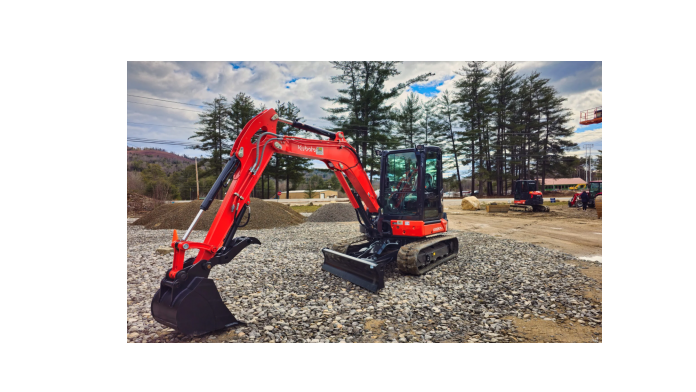
Excavator Rentals
Excavator Rental - Kubota KX-057-5 ONR 13,106#, 6.55 Tons
from $ 425.00 per day
- 13,106 lbs | 6.55 Tons | 47.6 HP | 19.3 Gallons
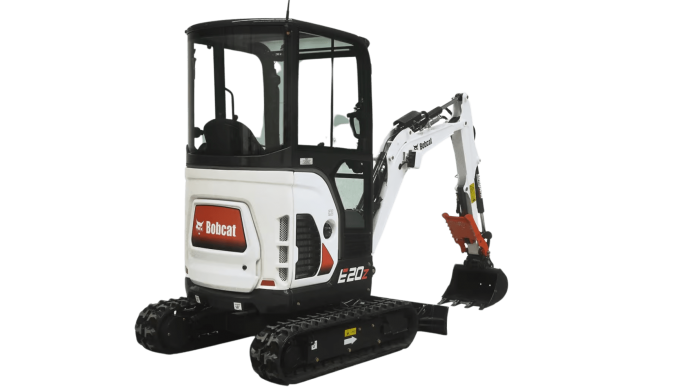
Excavator Rentals
Excavator Rental - Bobcat E20 Enclosed Cab Mini 4,300#, 2 Tons
from $ 299.00 per day
- 4,306 lbs | 2.15 Tons | 15.0 HP | 5.0 Gallons
Excavator Rentals
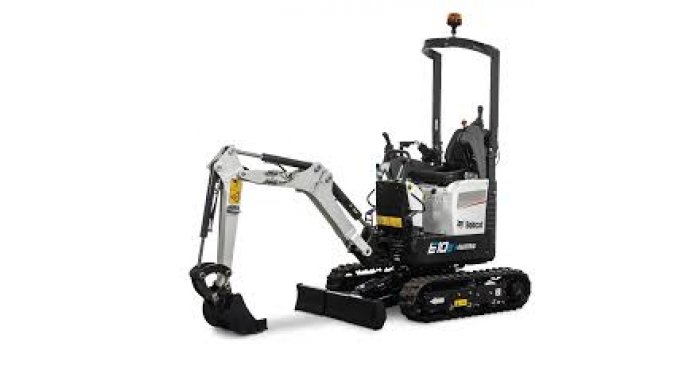
Excavator Rental - Bobcat E10 Mini Excavator 2593# 1,29 Tons
from $ 199.00 per day
- 2,593 lbs | 1.30 Tons | 10.2 HP | 4.20 Gallons