Track Loader Rental - Bobcat T66
Products -> Skid steer Rentals & Track Loaders Rentals
The Bobcat T66 compact track loader is what the job calls for when the site conditions — soft spring ground, sloped terrain, muddy access, or surfaces that can't absorb the point loading of a wheeled skid steer — make traction and ground pressure the primary equipment decision rather than just horsepower and capacity. NorthPoint Equipment Rentals stocks the T66 across all five New Hampshire locations, and it's a consistent call from contractors across the Lakes Region and North Country who've learned that the wheeled skid steer they rented last time wasn't built for what New Hampshire ground does to a job site between April and June.
Features





Description
What the T66 Brings to the Job
Rubber Tracks on Real Ground The T66's rubber undercarriage spreads 10,255 lbs across a ground contact area that keeps the machine working on soft spring soil, muddy site access, and wet hillside terrain that a wheeled skid steer churns through and gets stuck in. That track contact area versus a wheeled machine's tire footprint is the difference between a machine that maintains forward progress in New Hampshire mud season and one that spins in place making the surface worse with every correction.
74 Horsepower That Earns It At 74 horsepower, the T66 pushes through compacted material, moves full production loads, and drives hydraulic attachments at working output without the engine lugging under sustained load — the performance that determines how many cycles the operator completes in a day rather than just how many the spec sheet suggests are possible. Sustained horsepower output through a full shift is what production grading and loading work actually requires, and it's where the gap between adequate and capable shows up in daily output.
Vertical Lift Architecture The T66 runs a vertical lift path that keeps the bucket in a consistent forward position through the full lift arc, maximizing dump reach at full height and keeping load stability predictable on every cycle. For truck loading, over-wall dumping, and working at elevation, vertical lift geometry is the right configuration — the material stays where the operator puts it rather than swinging back as the boom rises.
Enclosed Bobcat Cab The T66's enclosed cab includes heat and air conditioning, a sealed environment that keeps dust, debris, and cold out of the operator space across the full range of New Hampshire working conditions. An enclosed cab on a track loader running demolition, land clearing, or site grading work in New Hampshire is the feature that determines whether the operator is productive at the end of an eight-hour shift or worn down by the environment the job creates around them.
Slope Stability Under Load Rubber tracks on the T66 maintain contact and stability on grades where a wheeled machine would slip, slide, or require constant steering correction to hold a line — the track system keeps the machine planted on the slope rather than fighting it. On the hillside residential sites, sloped commercial pads, and embankment work common across central and northern New Hampshire, that slope stability is what makes the T66 the machine for the terrain rather than the machine that manages it.
High-Flow Hydraulics The T66 supports high-flow hydraulic output for demanding attachment applications — forestry mulchers, cold planers, high-flow augers, and industrial sweepers that need hydraulic volume beyond what standard-flow machines can deliver. A track loader with high-flow capability is a different class of attachment platform than a standard-flow machine at the same horsepower — it's what allows the T66 to run production-rate attachment work rather than just nominally supporting the attachment category.
Ground conditions in New Hampshire don't wait for a convenient time to become a problem. A commercial site that looked workable in March is a mud field in April. A residential grading project on a hillside lot turns into a traction problem the first time it rains. A land clearing job on soft forest floor soil becomes an equipment management exercise rather than a clearing operation the moment a wheeled machine starts losing traction and compacting the surface instead of working it. The Bobcat T66 compact track loader exists for exactly those conditions — not as a specialty machine for unusual situations, but as the right tool for the terrain and season variability that defines job site work across central and northern New Hampshire for a significant portion of the working year.
At 10,255 lbs and 74 horsepower, the T66 sits in the mid-size compact track loader class where the machine has enough weight and power to handle production grading, loading, and attachment work at a pace that makes the job move — not just enough machine to technically accomplish the task. The rubber track undercarriage distributes that operating weight across a ground contact area that keeps ground pressure low enough to maintain traction on soft and variable surfaces without the surface damage and compaction that a wheeled machine's tire footprint causes on the same ground. That's not a marginal performance difference in New Hampshire's mud season — it's the difference between a machine that works consistently through a full day on site conditions that challenge traction and one that requires constant recovery from the situations those conditions create.
Bobcat built the T66 around a vertical lift path that produces consistent bucket position and dump reach through the full lift arc — a geometry that matters on loading jobs, over-wall material placement, and any task where the material needs to go up and out rather than just up. The enclosed cab is fully climate controlled with heat and air conditioning, and the operator environment is sealed against the dust, debris, and cold that production clearing, demolition, and site grading generate as a normal byproduct of the work. The control layout follows Bobcat's standard track loader configuration — operators with time on other Bobcat machines are productive on the T66 from the first hour, which matters on a rental where there's no grace period for the learning curve on a job with a schedule. The high-flow hydraulic system unlocks the full performance range of demanding attachments that standard-flow machines can't run at rated output — the T66 with a forestry mulcher is a clearing machine, not a machine that can technically turn a mulcher without producing useful results.
The contractors and municipalities renting the T66 at our New Hampshire locations are working jobs where ground conditions made the equipment decision before the scope did. Commercial site grading on spring-soft ground where a wheeled skid steer would be repositioning constantly instead of making progress. Land clearing on forested lots where the combination of soft forest floor soil, root systems, and slope makes track traction the prerequisite for productive work. Demolition support on sites where the machine needs to move through debris fields and over uneven broken material without the traction loss that wheeled equipment shows on irregular surfaces. Road and utility work where the machine operates on embankments, in drainage corridors, and on unprepared access that a wheeled machine navigates carefully rather than confidently. Our counter staff hears the same job description regularly across the Lakes Region: the site is soft, it's sloped, or it rained, and the contractor needs a machine that works on the ground as it actually is rather than waiting for conditions to improve.
Northern and central New Hampshire's terrain is genuinely varied in a way that makes a single equipment choice feel limiting across a full project — glacial till on the hillsides, sandy soil near the water, soft forest floor on clearing sites, and compacted gravel subbase on road and commercial work, sometimes across the same job site at different elevations. The T66 handles that range without the operator adjusting expectations as the ground changes — the track system maintains traction and ground pressure management across variable surfaces in a way that a wheeled machine can't replicate. For jobs that combine track loader work with excavation, the T66 pairs naturally with machines from our excavator and backhoe rental fleet — the track loader handles material distribution, backfill spreading, and loading while the excavator handles the dig, a combination that runs efficiently when both machines come from the same yard. For the broader category of skid steer, track loader, and attachment rental across New Hampshire, the T66 is the answer when the job site conditions have made it clear that a wheeled machine isn't the right call.
For land clearing jobs where the T66 runs a forestry mulcher or grapple attachment, our tree and land clearing rental lineup covers the additional equipment that typically accompanies a clearing mobilization. And for the compaction phase that follows grading and backfill work, equipment from our compaction and asphalt lineup pairs directly with the T66 rental without a separate mobilization. Before pickup, confirm whether your job requires high-flow hydraulics — the attachment list drives that conversation, and it's the right thing to establish at booking so the machine is configured correctly before it leaves the yard. Our best price guarantee applies on the T66 across all five locations, and contractors running the T66 on extended commercial and land clearing projects should set up a charge account to keep machine, attachment, and delivery billing organized across multi-day jobs. Not sure whether the T66 is the right call or whether the SSV75 wheeled skid steer covers your site conditions? Call us and describe the ground — our counter staff will give you a straight answer on which machine fits what the site is actually doing.
Specifications
| Specification | Value |
|---|---|
| Weight & Performance | |
| Operating Weight | ~10,255 lbs |
| Engine Output | 74 HP |
| Lift Path | Vertical lift |
| Undercarriage | |
| Track Type | Rubber tracks |
| Ground Pressure | Low — distributed across full track contact area |
| Cab & Controls | |
| Cab Type | Enclosed — heat & A/C |
| Control Layout | Bobcat standard track loader configuration |
| Hydraulics & Attachments | |
| Hydraulic Options | Standard flow / High-flow available |
| Attachment Interface | Bobcat universal skid steer attachment interface |
| Power & Fuel | |
| Fuel Type | Diesel |
| Engine | Bobcat diesel |
| Transport | |
| Operating Weight Class | Lowboy — confirm trailer rated capacity |
Confirm standard or high-flow hydraulic configuration at booking — attachment performance depends on the correct hydraulic setup before the machine leaves the yard. The T66 requires a lowboy trailer rated for its operating weight; verify trailer capacity before loading.
What It Gets Used For
- Commercial site grading on soft spring ground where wheeled skid steers lose traction before making progress
- Land clearing with forestry mulcher or grapple on sloped, soft-floor forested sites
- Demolition support — material movement and loading through debris fields and irregular broken surfaces
- Road and utility embankment work where the machine operates on unprepared slopes and drainage corridors
- Residential hillside grading and site prep where slope stability under load is the machine requirement
- Municipal grounds and road maintenance across variable terrain where traction is the daily variable
Questions Renters Actually Ask
When does the T66 track loader make more sense than the Kubota SSV75 wheeled skid steer? The T66 makes more sense than the SSV75 whenever the ground conditions, slope, or surface type makes traction the primary challenge rather than just horsepower and capacity. Both machines produce similar horsepower output, but the T66's rubber tracks maintain traction and manage ground pressure on soft spring soil, muddy sites, slopes, and variable terrain in a way that the SSV75's wheels can't match. If your job is primarily on hard, stable surfaces — concrete, compacted gravel, asphalt — the SSV75 is faster to maneuver and easier on those surfaces. If any meaningful portion of your job involves soft ground, slope work, or conditions that challenged a wheeled machine the last time you tried one on a similar site, the T66 is the right call. Call us and describe the site — our counter staff will give you a direct answer.
Can the T66 run a forestry mulcher, and does it have enough hydraulic output to work effectively? Yes — with high-flow hydraulics, the T66 has the hydraulic output to run a forestry mulcher at working performance rather than reduced output. At 74 horsepower and with high-flow available, the machine has enough power and hydraulic volume to keep the mulcher rotor at speed through dense brush and small-diameter woody material without the bogging that undersized hydraulic flow causes on a mulcher running at partial output. The track system is a meaningful advantage on clearing work specifically — soft forest floor soil, root systems, and slope are the normal conditions on New Hampshire clearing sites, and the T66 maintains traction on all three where a wheeled machine would be managing the ground rather than the clearing work. Call ahead to confirm high-flow configuration and mulcher attachment availability at your location.
What trailer do I need to haul the T66, and is it significantly harder to transport than a wheeled skid steer? The T66 weighs approximately 10,255 lbs, which requires a lowboy trailer rated at or above that weight — the same trailer class you'd use for a compact excavator in the same weight range. It's a step up from the transport simplicity of a light equipment trailer, but not significantly more complex than hauling any other machine in the 10,000 lb class. No oversize permits are required on standard New Hampshire road routes at this weight, and no CDL is needed if your combined rig weight stays under 26,000 lbs GCWR. Confirm your trailer's rated capacity before loading — if you're unsure whether your setup is right for the T66's weight, call us before pickup and we'll walk through it.
Other products
Browse some of our other products
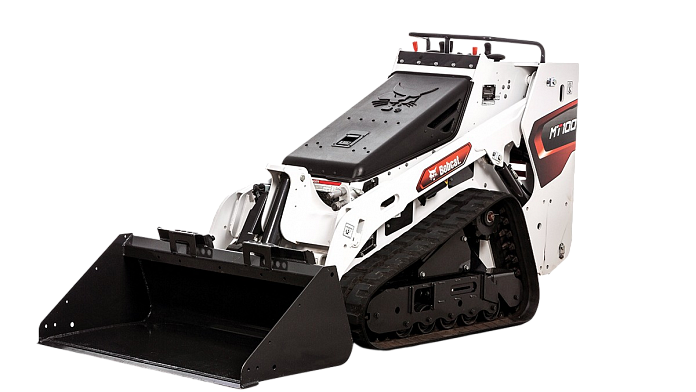
Skid steer Rentals & Track Loaders Rentals
MT100 Mini Skid Steer Loader Rental - 001Bobcat
from $ 250.00 per day
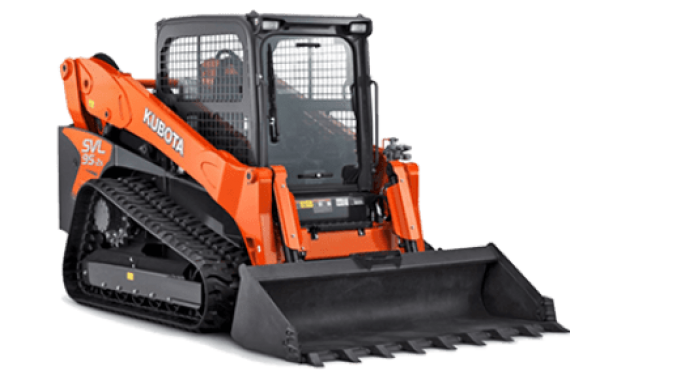
Skid steer Rentals & Track Loaders Rentals
Track Loader Rental - Kubota SVL95
from $ 375.00 per day
- 11,299 lbs | 5.6495 Tons | 96.4 HP | 28.8 Gallons
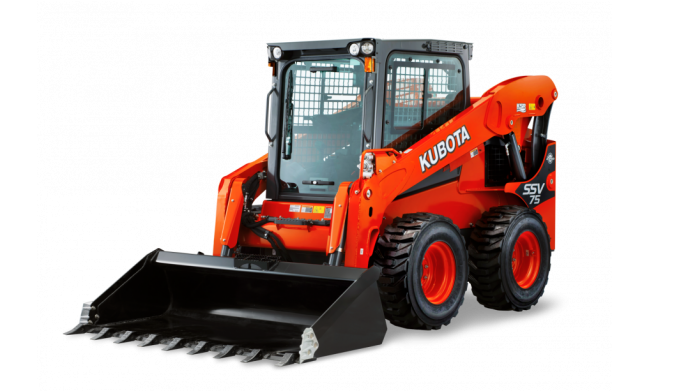
Skid steer Rentals & Track Loaders Rentals
Skid Steer Rental - Kubota SSV75-3
from $ 325.00 per day
- 8245 lbs | 4.12 Tons | 71.6 HP | 26.9 Gallons